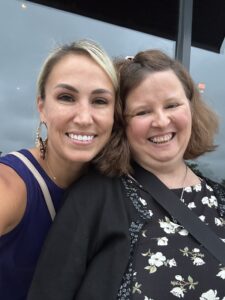
By Ashleigh Cieri, Director of Programs, Compeer of Greater Buffalo
Loneliness is one of the most common and most misunderstood mental health challenges of our time. It doesn’t always look like someone sitting alone in a dark room. Often, it appears as a person functioning: going to work, attending appointments, and being present for family. But inside, they feel disconnected, unseen, and unsupported. Over time, that disconnection can quietly grow into depression, anxiety, and a deep sense of isolation.
At Compeer of Greater Buffalo, this is what we exist to change.
What Compeer Does and Why It Matters
Compeer is a community-based mental health mentoring organization. Our mission is simple but powerful: to champion mental well-being by connecting people through caring, supportive relationships.
For nearly 50 years in Erie County, Compeer has paired people experiencing mental health challenges with trained volunteer mentors who provide friendship, consistency, and social connection. We also offer peer support, group programs, social activities, and mental health education that give people a place to belong and a reason to show up.
Unlike clinical services, Compeer doesn’t provide therapy or treatment. We provide something just as essential: a human connection. We help people rebuild their social lives, find confidence, and remember that they matter, not because of a diagnosis, but because they are human.
Our clients come to us through referrals from mental health providers, schools, and community organizations. They may be managing depression, anxiety, trauma, or serious mental illness. Many are also navigating poverty, trauma, stigma, and long-term isolation. What they all have in common is a desire for connection and support beyond what a 45-minute therapy appointment can provide.
Compeer meets people where they are. Some find their place in a one-to-one mentoring match. Others build community through group programs like men’s groups, peer-led discussions, or social outings. Some are supported by Certified Peer Specialists who have lived experience of mental health recovery. All of them are welcomed into a community where they are not alone.
What I Do at Compeer
As Director of Programs at Compeer of Greater Buffalo, I have the privilege of supporting this important work. My role is to oversee and support the staff who run our many programs, ensure that what we offer is high-quality and responsive to community needs, and guide how Compeer evolves as mental health needs continue to grow.
On any given day, that might mean working with program staff to improve how we match volunteers and clients, collaborating with evaluators to understand what’s working, helping staff problem-solve complex client situations, or meeting with community partners to expand access to our services. I also spend a lot of time thinking about the future: how we can reach more people, use data more effectively, and adapt to changes in funding, policy, and technology without losing the heart of what makes Compeer special.
But the most meaningful part of my job is seeing the impact of connection in real people’s lives.
I see clients who once stayed in their apartments for weeks at a time start attending social events and forming friendships. I see volunteers who signed up to “help someone” realize they, too, are gaining confidence, purpose, and a sense of belonging. I see staff who care deeply about this work pour their hearts into supporting others. It is a powerful reminder that mental health is not just something that happens inside our minds; it is shaped every day by our relationships.
The Link Between Depression and Loneliness
Depression and loneliness are deeply connected. When someone is isolated, they have fewer opportunities for positive reinforcement, fewer moments of joy, and fewer people to reflect back their worth. Over time, that can lead to feelings of hopelessness, low self-esteem, and despair.
At the same time, depression often makes it harder to reach out. When you feel exhausted, unmotivated, or ashamed, returning a text or leaving the house can feel overwhelming. This creates a painful cycle: loneliness fuels depression, and depression fuels further isolation.
We see this every day at Compeer. Many of the people we serve have lost friends over time, drifted away from family, or never had strong social networks to begin with. Some have experienced stigma or rejection because of their mental health. Others have been so focused on survival that relationships fell by the wayside.
What mentoring and social connection do is interrupt that cycle.
When someone joins Compeer, they are no longer alone in facing the world. They have volunteers and staff who show up, who listen, who notice when they’re struggling, and who celebrate their wins. That kind of consistent, non-judgmental presence is incredibly healing.
Research backs this up. Studies consistently show that strong social relationships are one of the most protective factors against depression and suicide. Connection reduces stress, increases resilience, and helps people feel hopeful about the future. You don’t have to solve someone’s problems to help their mental health, you just have to be there.
How Mentoring Helps Both Sides
One of the most beautiful things about Compeer’s model is that it is mutually beneficial. While clients gain support, confidence, and friendship, volunteers gain something just as powerful: purpose, empathy, and connection.
Many people who become Compeer volunteers are also seeking something. They may be new to the area, navigating life changes, or wanting to do something meaningful with their time. Through mentoring, they build real relationships, not just perform acts of charity.
We often hear volunteers say things like, “I thought I was signing up to help someone else, but this has helped me just as much.” They describe feeling more grounded, more grateful, and more connected to their community. They learn how to listen, how to be present, and how to see the world through someone else’s eyes.
In a society where so many people feel lonely, mentoring creates a bridge between two people who might never have met otherwise, and both walk away changed.
Why This Work Is So Important Right Now
We are living in a time of unprecedented mental health need. Rates of depression, anxiety, and loneliness have risen dramatically in recent years, fueled by the pandemic, economic stress, and social disconnection. At the same time, mental health systems are stretched thin. Therapy and psychiatry are essential, but they cannot replace the everyday human relationships that keep people well.
Compeer fills that gap. We provide the relational support that helps people stay engaged in their treatment, feel motivated to keep going, and remember that they are not alone.
When we invest in mentoring and social connection, we are not just helping individuals; we are strengthening our entire community. People who feel connected are more likely to work, volunteer, care for their families, and contribute to society. They are more likely to recover.
Connection Is Where Healing Begins
At its core, Compeer’s work is about one simple truth: connection is mental health.
When people feel seen, valued, and supported, they heal. When they have someone to call, somewhere to go, and a reason to leave their house, their world begins to open up again.
As someone who has dedicated my career to this work, I believe deeply in the power of relationships to change lives. I see it every day in the stories of our clients, volunteers, and staff.
No one should have to face depression alone. And with community, they don’t have to.
If you would like to join our mission, please reach out to me- I’d love to chat! Call me at 716-883-3331 ext 311 or email Ashleigh@compeerbuffalo.org

Compeer’s Purpose: Champion Mental Wellbeing. Connect People. Build Relationships… One Friend at a Time.
Values: Mental Wellbeing • Inclusion • Trust & Transparency • Integrity • Curiosity
Since 1985, Compeer Buffalo has been providing social support in the form of friendships, to individuals (age 6 and up) who are striving for mental wellbeing. We know that friendship decreases loneliness and isolation, therefore we offer 1:1 friendship, social engagement activities, school-based mentoring, and mental health education in our community.